Thursday, March 14, 2013

Wreck-It Ralph. Best. Game. Movie. Ever.

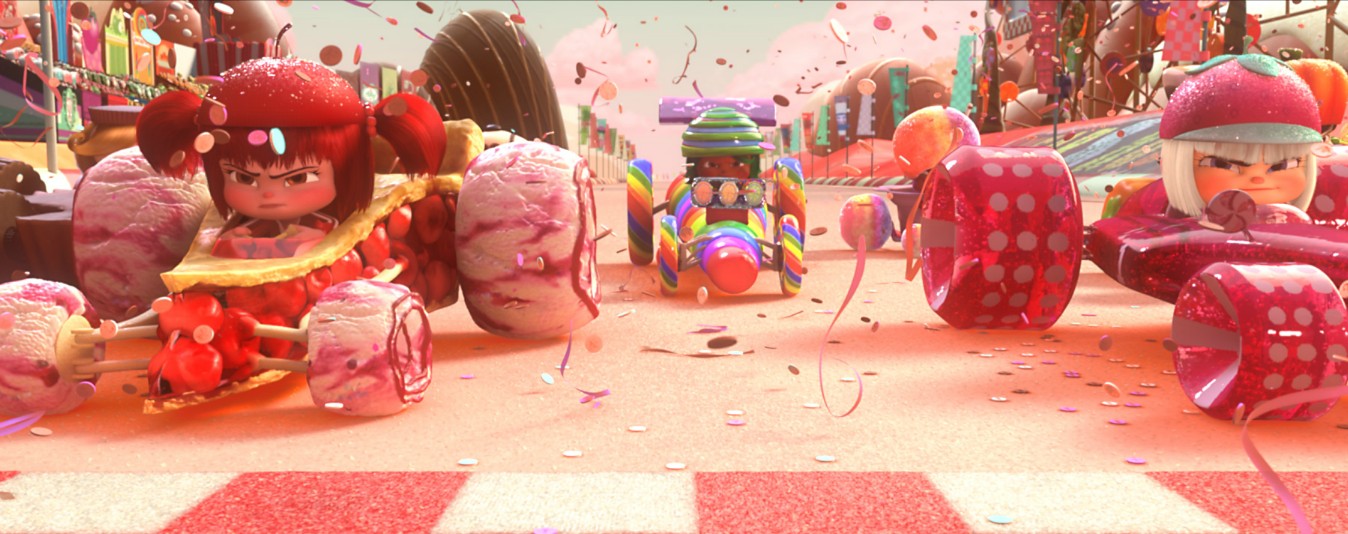
The other day, several of us graduate students went to see Wreck-It Ralph at a free screening at the Ohio Union upon the first day of its dvd release. This was the first time I have seen it, and I was impressed. The animations are nicely done, and I was really thrown into the movie with the different game worlds that Disney had designed. The environment design / set dressing was amazing in this film. It takes the idea of Tron, but instead of inserting real people into virtual worlds, it personifies virtual game characters in an imaginative way. The characters live physically within an arcade, but within each game thrive in their own virtual game worlds. There is also an "atrium" meeting place where all the video game characters can leave their games in their off time, which I thought was a nice way to create a means of allowing the characters to leave their individual game space and interact with one another outside their own games. The cords on the arcade machines acted as a means of transporting the game characters. The film also mentions programming and "glitches" a lot, as embodied by Vanellope's character. I thought that this was a simple way to convey some of the very complex aspects of game design to the target audience: kids. Also, the castle vault where King Candy locks away the game's programmed framework was an imaginative way to visualize the very complex code that goes into creating a game. The modeling, animation, and particularly the shaders were amazing in this film. I loved the shaders in Sugar Rush. All the variations of textures on the different kinds of candies were very realistic and all the surfaces retained their rightful qualities. And since candies are so decorative and colorful, there was really a lot of creative liberty the texture tds could take. In the still below, the reflections/refractions and the bubbles on the hard candy are great! Also, just look at the ice cream wheels! JUST LOOK! So awesome. I want to eat it. The film's story was easy to follow and I think it included just enough details for all viewers to enjoy it - young and old. The nostalgia for throwback games is apparent - the 80s/90s style of the 2D 8-bit Wreck-It Ralph game, and the appearance of Bowser and some other characters we see in Bad-Anon, Sonic the Hedgehog, and Pac-Man. I believe this film should have won the Oscar over Brave. I think its story was stronger and the work that its artists put into this movie was apparent. I could probably watch this film over and over again and still see things that I missed. Some of the scenes seem a little over-designed, as in A LOT of stuff is crammed into each frame, but I think that video games are oftentimes built that way and it goes along with the mise en scène of the film. This film, along with Paranorman, are my favorite animated films from last year.

Sunday, March 3, 2013

Sound City Movie is Effing Rad.

Yesterday I went analog and left my cell phone at home for the afternoon/evening, and I took myself on a little date to see Sound City, a documentary by Dave Grohl that illuminates the history of one of the most instrumental recording studios in the history of American rock and roll music. The irony is that Dave Grohl, famous former drummer of 90s grunge rock band Nirvana and later, lead singer/guitarist for The Foo Fighters, had not the slightest inclination of the history of the dumpy Van Nuys studio when he and his neophyte band Nirvana had stumbled in there to record Nevermind, which ended up selling 30 million copies worldwide and reaching number one on the Billboard charts, trumping Michael Jackson's Dangerous. This was his journey back to the recording studio which started it all, but this time he recounted its history in full, from the days when Stevie Nicks recorded there as did Tom Petty and the Heartbreakers. The studio also acted as a launch pad for Rick Springfield, as it skyrocketed him to fame with the hit single Jessie's Girl. Countless acts recorded their record there, and from watching the film, the place looked something of a sh*thole. Although I look nothing like a person who would be into rock music, when I was in high school, I discovered that I loved Queens of the Stone Age, Rage Against the Machine, Nine Inch Nails, Foo Fighters, and etc. etc. These were some of the newer acts to record in this studio. At the end of the film we find out Dave has a sense of nostalgia for this piece of rock and roll history. Upon the demise of the studio, Dave said he would do anything for the custom Neve console (analog soundboard) that had been installed there at the studio's inception. So, he purchased the console and had it installed in his own personal studio where he and Paul McCartney had a little recording sesh.

My favorite moments of the movie happened when Dave was interviewing the brilliant electronics engineer, Rupert Neve, the man responsible for engineering the famous Neve console, and Dave makes a face of utter confusion while a subtitle appears with the question, "Does he know I am a high school dropout?" There is also a moment when they are laughing in the studio as Dave and Paul McCartney record a song, and the producer (Butch Vig) on the other side of the studio is giving them orders, and Dave says sarcastically, "yeah tell Paul McCartney what to do." The film is rich with history, good humor and just all around interesting stories. I think it can speak to everyone because it is about a fundamental cultural identity of America - Rock and Rollllllllllll! *Says that in shouty/screamy voice*

The film brings up questions about the authenticity of art. And this does not apply to just musical artists - but to all artists. We all live in a digital era - the analog tools they used before are being ditched in favor of more digital methods. Because the studio's console used tape to record the songs that were made there, songs were recorded and mixed in analog. Some of the songs recorded there were even recorded live! This is based on the notion that art and humans are by nature, imperfect and the imperfections make their music special. What drives the artists to choose the right song is a "feel" - it's just a special feeling they get when they know it's right - it might take one session to record, or hundreds and the notes might be off key, the timing off tempo, but it just has that special feel, a quality that can't be explained. The film basically states outright that the tools that artists use should be no more than tools; what underlies all great artists is their willingness to learn and work hard, and the talent that is acquired because of this. Consequently, a lot of artists that have no business being in the music industry [and have little to no talent] record their songs on their laptops using Pro Tools.

Now, the film doesn't blast new technology entirely. It makes what once was not accessible, accessible to the masses. And Sound City artists like Trent Reznor use digital tools as a means to get different sounds out of the instruments he plays. In one part of the film, it depicts him recording a song on a keyboard, while it was being mixed into the computer, revealing a warped more digital sound altogether with Dave in the background explaining that "he is one of the smartest people he knows." Trent talked about how the music he created has been a result of his parents' decision of having him take piano lessons when he was a child. He learned everything he could about music structure and form, recording at Sound City back in the 90s as Nine Inch Nails, but also allowing digital technology to influence his signature sound. More recently he has written and composed scores for movies such as Girl with the Dragon Tattoo and The Social Network. I agree with Trent's style and philosophy of creating art - you must have a foundational talent that stems from learning the art form classically, before you can use digital methods as another tool to create art. Your talent does not just get "given" to you simply because you were given a tool to create something with (I'm talking to you and your crappy music, Ke$ha). It starts young and is a learned talent. As for me, I was drawing and painting when I was old enough to hold a crayon. I went to art school, developed my drawing and painting skills before I could learn to create digital art using a computer. I think it's better that way - the foundational skills are very necessary and are always there.

The only qualm I have (if any) about the film was that it kind of beat the viewer over the head with enthusiasm for making music. On coming out of the theater, I heard one guy say sarcastically, "That film makes me want to go out and record music now!" It was kind of like, go do it! Don't think about the consequences! Who cares if you are driving around without any money living in a van! As long as you have a dream you'll be okay! I'll take that with a grain of salt, as the lifestyles of musicians are absolutely nuts! haha. But absolutely splendid documentary. GO SEE IT!

Here is the link to the movie's web site.

And, LOLz:

Sunday, February 24, 2013

Project II Proposal - What Does Reality Mean to You?

CONCEPT - WHAT DOES REALITY MEAN TO YOU?

The concept for this project stems from the information I have sorted through and collected for my thesis. This animation has to do with the information I collect from a survey I created and distributed through the internet Facebook and email lists). This method of distribution worked well last year for my pilot study, and I collected responses from 57 people. However, the web site Kwiksurveys, which hosted the survey, had a server crash and lost all of my data. Last week I sent out a new link to the new SurveyMonkey survey. Before I posted the survey, I listed a link to my video from the last project - Reality, Defined. This is intended to help get the survey-taker thinking about these subjects.

The survey asks 6 questions (3 demographic, 3 philosophical open-ended essay questions):

1. Please choose your age group

2. What best describes your occupation or field of study?

3. How often do you watch movies?

4. How are some ways in which people perceive reality in the present day (This can be influenced by technology and circumstance, for example)?

5. What does reality mean to you? Define the word "reality" - what it means to you in simple terms.

6. Describe the reality you see or do not see in current films. Do you see any trends towards realism or are films moving away from it? Explain. (You can use your own definition of "reality" here or a new one).

Here is a link to the survey

The questions are intentionally left ambiguous and open-ended so the survey-taker can go off on tangents about their own thoughts and opinions on the subject. The survey is well-underway and does not need IRB approval (Maria and I inquired about that). The intended audience is anyone and everyone. I think most of the responses, however, will be young people around my age who use the internet, because I used a Facebook event and sent the link out to current grad students at OSU via email as a method of distribution.

The answers from last year’s survey were varied but had interesting repeating trends within the answers, so I decided that once I collect all the new data I can use the answers to create a framework and narrative for my new animation. This will be dependent on the repeating answers, as well as the interesting outliers. One unique example, for instance, consists of a user talking about how drugs influence reality in the present day, and how films such as Fight Club psychologically explore reality in a much more intriguing way than other films. These kinds of answers are great for creating a narrative piece which will then translate over to a larger thesis film for next year. I intend for this version to be an exploratory piece, and next year’s film to be lengthier and included more information.

The basic concept for this research is that I want to establish a dialog about the ways in which society perceives reality, since every individual can perceive reality differently. I would also like to sprinkle in information about how films portray reality, considering technology in film has really altered perceptions of what reality looks like - and also has altered people’s expectations.

Examples/Inspiration

I am enamored with the style of the animation in this soil video. It is simple, with stylized low-poly objects that create an interesting dichotomy between 3-Dimensions and 2-Dimensions. This play on dimensions feeds into my concept of various forms of reality, and might be a little easier to texture and model given the time frame we have for this project. My project will not have a character, however, because I want the viewer to be experiencing the reality I talk about firsthand. I also would like to have richer textures - maybe created with paintings I make.

Examples/Inspiration

This is a still from a style test animation I created based on a painting I made as a BFA student called Untitled. It uses 3D objects composited with painted layers. I am thinking about combining hand-created textures with animation.

Monday, February 18, 2013

Reality, Defined: Process and Final Video

Short Description:

This short video was created as an introduction to my thesis area of study. Reality is an elusive subject that can be perceived by every person differently. This video provides a crash course on several forms of reality such as virtual reality, augmented reality, and hyperreality. The video was created in the style of the Everything is a Remix series here on vimeo, using several forms of media such as vector graphics, video, and free stock photos. Song is by Deltason called "Remote" from freemusicarchive.org. Virtual Reality Video is called "Virtual Eye Glasses EPK" available on archive.org.

Process and Reason for Making.

The process for making this video depended on syncing up my voice recording with motion graphics that I created and various media that I found and thought would fit with the themes and concepts of my script. The idea for this video stems from thesis writing that serves to establish definitions for repeated concepts I will use in my thesis paper (will most likely be appendix information). This will allow the reader to fully understand the difference between the forms of reality I mention in my paper, and also provide more information that won't appear in the paper for reference. It will also serve to introduce a survey I will give for my final thesis project.

Friday, February 8, 2013

Thinking about Light and a Balanced Life

Today I was thinking about lighting and I stumbled upon this video. Beautiful visuals, which play with light and set a peaceful serene soundtrack to the film. The light in this piece is so brilliantly achieved - in a variety of different spaces and contexts. What I also noticed is that it uses AfterEffects techniques we learned in class - Using 3D layers in post with a moving camera that utilizes impossible camera movements filmmakers could not readily achieve in physical space, but only in digital space. Some of these shots achieve photorealism and I actually had to double check to make sure that some of the film source for this film is not live-action (although it uses telescope photos from space)! I thought the shots with the drops of water on the spider web were gorgeous, as the way the light and reflections/refractions sparkle and showcase that nice shader on the water droplets is brilliant. I think this short film captures a sense of wonder, and really put me in a mood to make peace with my work and be at ease. This film, with the music and the beautiful scenery is metaphysical in nature. It got me thinking about life balance and order. I think this is important because we all have a lot going on right now... I know I consistently bite off more than I can chew and blindly hope it all pans out for the best. Taking a moment for mental health is key in maintaining sanity, especially with a ridiculous work schedule (my fellow grad students agree). I think for now, I am going to focus on maintaining a balance in all aspects of life, as this vital for well-being.

Monday, February 4, 2013

Grit

Today I wanted to post a quote that Nikki (another grad student) showed me, a quote from Ira Glass, a public radio personality and host/producer of This American Life. I find myself coming back to this quote in times of doubt or times that I experience "masterpiece syndrome," perfectionism in my work, or also pessimism. I think it's a great point of reflection for any person who has chosen a career path in a creative field. It's difficult to find structure and know when exactly there is a point to continue or a point to stop working on projects that are creative, especially self-directed projects. You really have to rely on your experience with design and art to create work that communicates to an audience in an effective or interesting way. What speaks to me about this quote is that it carries the message that you have to try. And work hard. And fail many many times. It's a natural and normal process in life and in a creative career. But what never changes is your core taste which got you into the game. Take a minute to think about how far you've come. Sure, a lot of your work has probably sucked, and you've probably failed many times. But hey, you worked and planned and tried until some of your work was actually good. And then better. And even kick ass!!!. This quote is a great daily affirmation. Never give up creatives! The ones who succeed are never the smartest, or even the quickest to learn, etc. They are the strong ones that keep pushing and never give up even when their early work belongs in the trash can. They create volumes of work with no hesitation. Only by trying everything, they find their perfect niche. They are the ones who work the hardest and have endurance. The most successful creatives have the most grit. --Quoted from Ira Glass--

“What nobody tells people who are beginners — and I really wish someone had told this to me . . . is that all of us who do creative work, we get into it because we have good taste. But there is this gap. For the first couple years you make stuff, and it’s just not that good. It’s trying to be good, it has potential, but it’s not. But your taste, the thing that got you into the game, is still killer. And your taste is why your work disappoints you. A lot of people never get past this phase. They quit. Most people I know who do interesting, creative work went through years of this. We know our work doesn’t have this special thing that we want it to have. We all go through this. And if you are just starting out or you are still in this phase, you gotta know it’s normal and the most important thing you can do is do a lot of work. Put yourself on a deadline so that every week you will finish one story. It is only by going through a volume of work that you will close that gap, and your work will be as good as your ambitions. And I took longer to figure out how to do this than anyone I’ve ever met. It’s gonna take awhile. It’s normal to take awhile. You’ve just gotta fight your way through.”

Tuesday, January 29, 2013

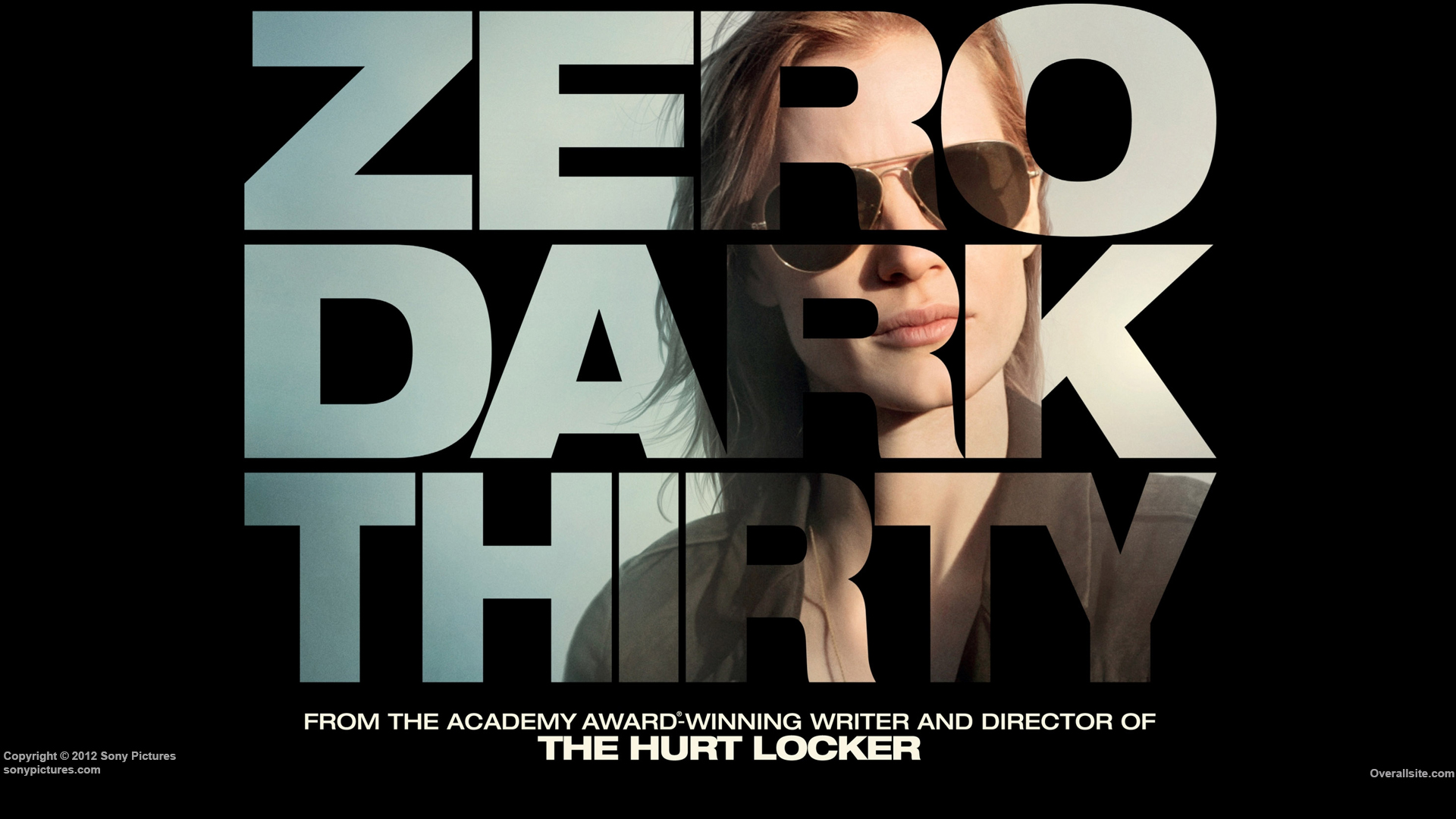
Zero Dark Thirty

I don't want to make this blog solely about films, but I figured this one was too good to not talk about. I saw this movie the day it hit theaters. It illuminates everything that occurred leading up to Osama Bin Laden's capture - which I think the average American had not been fully aware of and did not understand entirely until now. The film apparently is controversial because of the torture that supposedly the United States government is denying taking part of. Yes, the torture scenes to me seemed inhumane - because torture in itself is by nature, inhumane. That being said, some of the tactics and crimes against humanity that I have read about that have occurred in the past or that other countries and terrorist groups have been part of, are much worse. The stuff I have read about makes this movie's torture scenes look like a vacation. If you want to know what I mean, or if you want to cry a little bit, read Luz Arce's book, about Pinochet's military junta in the 70s and 80s in Chile. It details very closely how she lived in fear for years being brutally tortured and raped repeatedly, living in fear and having to become aligned with a corrupt political party in exchange for survival. It is really, really sick and disturbing (Here is the link on Google Books). And I mean even more sick than The Human Centipede. Anyway, I just thought I would mention that because her book scarred me for life and the torture scenes in Zero Dark Thirty maybe weren't as bone-chilling as some of the reviews are making it out to be. I also think that the American government does not want to fully reveal all the exact details of Operation Neptune Spear because they are classified and simply not the agenda of the average civilian - which is why certain artifacts in relevance to the truth of the movie are being denied by the government. And also there is the claim that information that had not been declassified was obtained during the research of this film without governmental consent. But this is besides the point. What I appreciated about this movie was the way this movie communicated its message: That no matter what, war is bad. I think it made a statement; that assassinating Osama Bin Laden was not a happy, fun thing that everyone should all sing and dance around a bonfire about and scream "'Merica!!!" while waving our firearms around in the air. There are no winners in war. Period. I think a lot of people went into this movie thinking it was all about propaganda and celebrating Operation Neptune Spear. Although it is biased (because it follows an American CIA operative), I don't think it beat the viewer over the head with the fact that America was elated about the operation. I think it was more of a "this-situation-really-sucks-but-justice-needs-to-be-served" kind of thing. And this justice doesn't just speak to America. Because The al-Qaeda are a terrorist group, and do not "sit well" with a myriad of governments and political groups. Osama's body was dumped in the ocean because no country would receive it after the operation had been executed - including Pakistan where he had been secretly hiding out. The film never really became cheesy because it did not depict Osama Bin Laden, nor did it show the president. Leaving these elements out entirely focuses on the operation at hand, and the one operative who worked tirelessly on this manhunt and did not give up even after a decade. It also gives the film more of a timeless and universal quality, as the two enemies are faceless. The middlemen (in this case the middlewoman) are really the ones who pushed for this operation and for the fulfillment of justice. The audio in this film is also amazing. The first sequence of the film is just a black screen which allows the viewer to listen to the actual desperate final emergency phone calls of the victims of 9-11. It really creates a chilling experience which serves to dramatically introduce the film. The film also leads me to believe that government jobs look very difficult. And ethically conflicting. And serious. It was tiring to watch Jessica Chastain in duress during the pursuit of OBL. And when you feel as though you can empathize with a character, you know the film has done its job. Very poignant film.